
I’ve never been to Northern Africa, but I can promise that the sun was hot. Hot, tripling in size, and the texture of new rust. I stood at the edge of an untilled field that stretched for miles, cupping a small pile of sea salt in my left hand. A man with thick, greying hair and a sharp nose stood at my side, looking down at the salt.
“Well,” he said, “Don’t wait! Start throwing it. You’ve still got the whole field to do.” I gazed at his face more closely and recognized him as my tenth grade Latin instructor, Mr. Strand. Years earlier in a lecture, he’d told me it was rumored that when Carthage fell, hundreds of weakening people had to till salt deep into the fields after a battle. He said it might not have been true, but the story held. Lost in time, I saw the unchanging flat of the plane before me then, watching plumes of purple smoke billow into the sky next to a browning, rugged earth. I wondered if I’d helped raze Carthage too.
“But there are only two of us.” I lifted my arm to the horizon and gestured in a sweeping motion. “Two of us and all that ground.” The salt started to get hot in my palm, mixing with the sweat of my skin. Salt on salt. He pointed to a mountainous arsenal of more salt behind him, towering over me without a shadow.
“Well then,” he said, “You’d better get started if you don’t want to be doing this for the next two thousand years.” And so, unwilling to risk the consequence of an unfinished task, I began plowing tons upon tons of salt into the ancient Carthaginian fields.
Aside from the heat, it could’ve been worse. The sun never set on me, it followed in circles as I diminished the pile slowly from field to field. Over time my shoulders hardened like cement and my hands caked with the brine of dirt and sodium, but I didn’t stop. There was no need. No one was left in the city to distract me from my work and I had no capacity to tell time. The process was quiet, glued together by the howling wind as I plunged my arms through the dust. But one day, long after my vision had fogged into sand particles and sunspots, I reached the last of the salt. I stood haunch-backed over the acres of land I’d covered, remembering each rock I’d turned over.
“That didn’t take terribly long!” I said to myself. I watched the words dribble from my mouth as another wisp of purple air and collect in the ether above me, now heavy with trapped smoke.
In the blink of an eye, I was running through the low-lit basement of school. I could see again and no longer smelled like the mud. I swung through the door of my class, always the last one on the left. Hovering in my place before a room full of my peers and Mr. Strand, I was met with tired silence. His line of vision rose up from his desk and found me. He stroked his beard and squinted at me where I teetered on the edge of the doorway.
“You’re late.” He said while strumming his fingers across a textbook.
“I’m so sorry,” I gasped, “I just got done with–”
“I know.” He cut me off. “You’ve interrupted us here. Hand in your homework and take a seat.” At each “T” sound, he spat in my direction. Still heaving from my entrance, I realized that I didn’t have my homework.
I dropped into a desk near the door. The attention had shifted back to the blackboard, a lesson on Pliny, so I sat still while he droned on, picking the last of the salt out from underneath my thumbnail.
#
author bio:
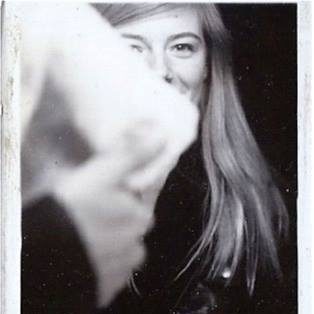 Claire Younger Martin graduated from Columbia College Chicago in 2017, where she was a managing editor for the literary magazine Hair Trigger, as well as the interview editor for its online counterpart, Hair Trigger 2.0. Her recent fiction can be found in Hair Trigger 40, Longshot Island, Ariel Chart, The Magnolia Review, Scarlet Leaf Review, and Menacing Hedge. These days, you can likely find her holed up with a camera somewhere along Lake Michigan.